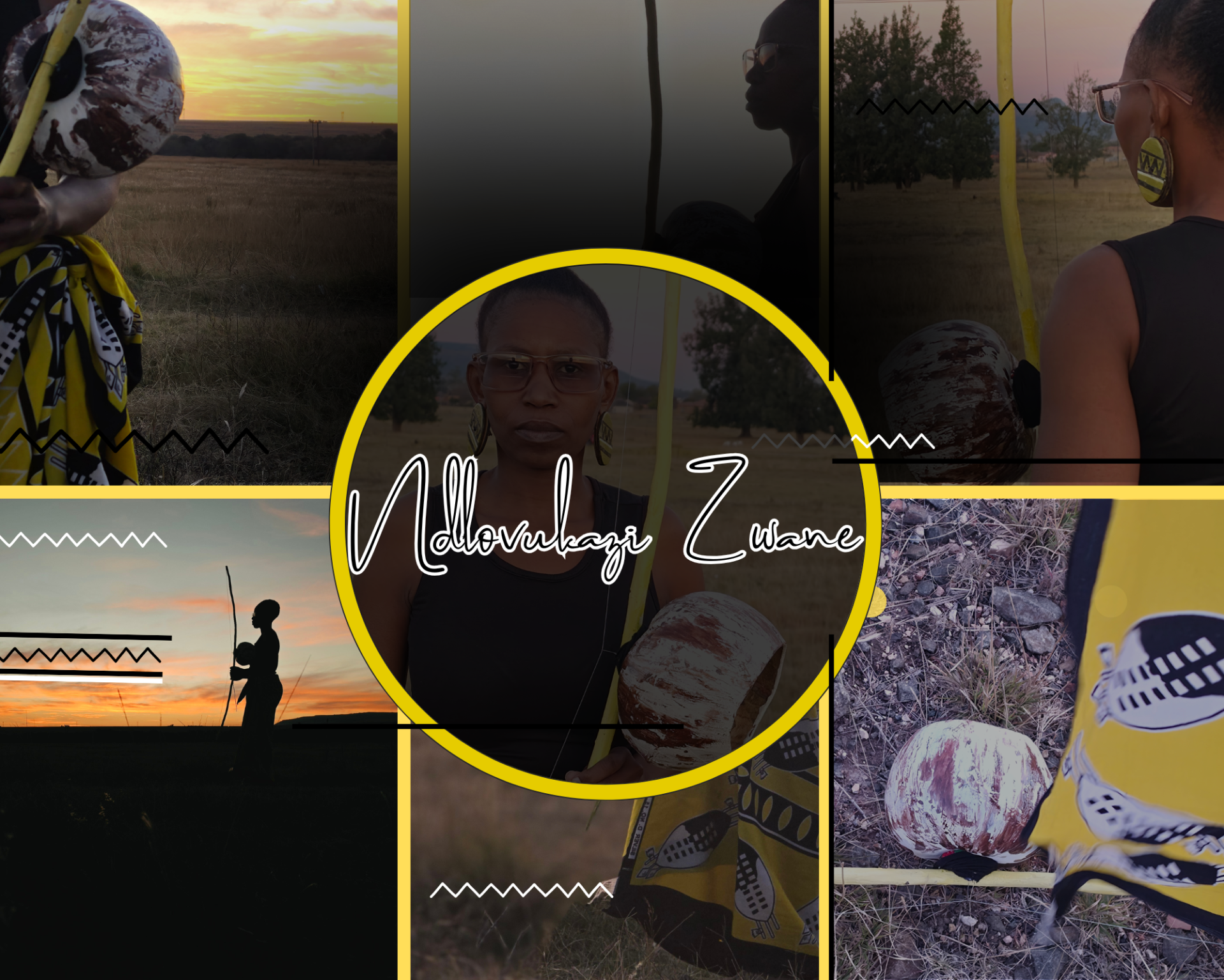
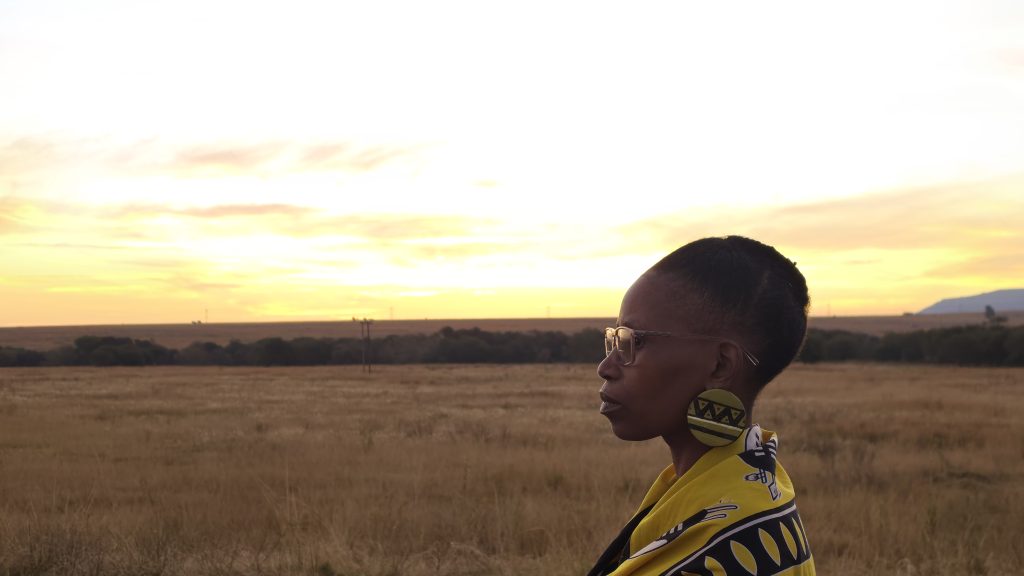
Ndlovukazi Zwane is a singer, songwriter, umakhweyane player and broadcaster. Born and raised in Ethekwini, and moved to Newcastle, eMadadeni when she was 16.
She started making music in 2005, juggling it with radio presenting and producing. Her musical voice started to take shape when she noticed the music and type of radio she was drawn to.
She was drawn towards the musical artists like Tu Nokwe, Busi Mhlongo, and later discovering the Angolan singer and percussionist Vivalda Ndula.
Ndlovukazi herself, makes southern African indigenous music, mainly focusing on amahubo, Nguni chants, and later picking up the bow instrument, umakhweyane. Playing music that she says is inspired by “life and nature”, and is for, “anyone who seeks healing and cultural identity,” and is sure to bring a smile on Princess Magogo, The Empress of Amahubo.
Through her music, she says, “I look forward to seeing more young people learning about culture and embracing it. Also collaborations with other genres, especially the popular ones so that way they get to learn about indigenous music and instruments.”
She is currently brewing her sound, and is working with a creative team to roll out her work for late 2026.
Ndlovukazi’s earliest memories of the craft of broadcasting, were voice-overs.
She was taken by the work of the legendary presenter Malindi KaNtuli with her work on Ukhozi FM, especially mothering other women within the broadcasting industry.
Bertha Charuma is also one of the radio presenters who have caught her ear.
Holding a qualification in Radio Presenting and Broadcasting. And has worked as presenter, producer and compiler for community radio stations like Newcastle Community Radio (now Newcastle FM) and Nquthu Community Radio.
She is currently on the pre-production phase of her podcast that will be available shortly after the roll out of her music.
With her music based in the embracing of African cultures, she is also a cultural worker through projects like Miss Heritage KZN. A culture-centric pageant that teaches girls accredited self-development skills and cultural education.
And June 16 Utrecht Street Games, where they gather the community to come and play indigenous games like umasgenda, umlabalaba, and other games such as netball and street football.